

Raiding your
retirement
to make a
down payment
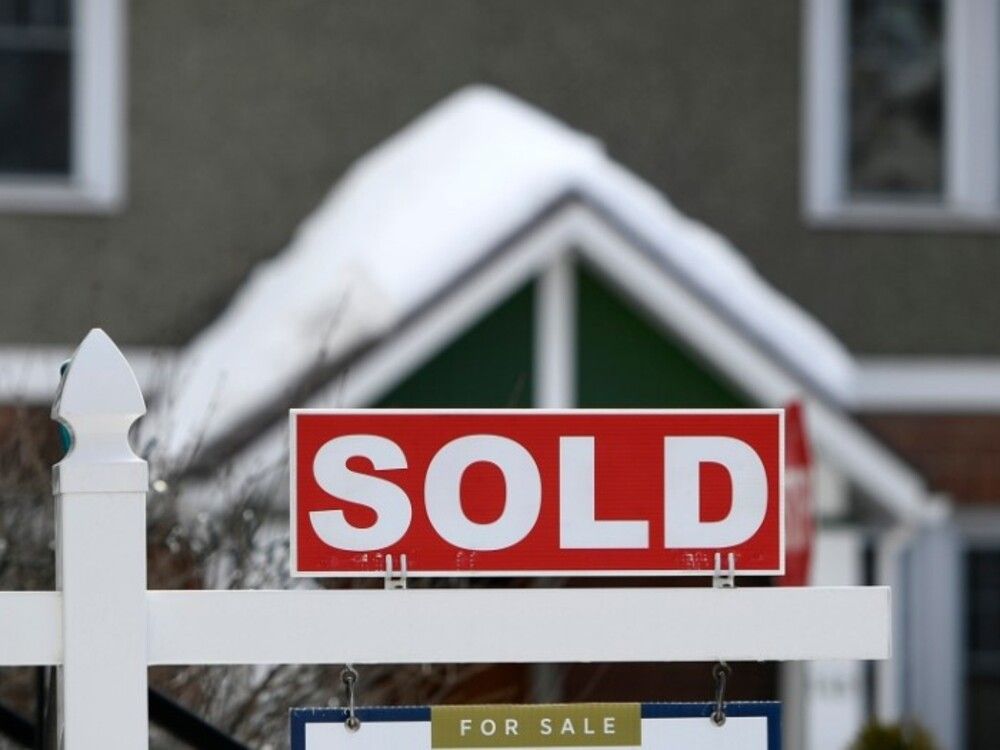
on your first home is a Canadian tradition that has long been encouraged by the government, but for young Canadians who bought homes at the top of the market, the strategy is looking like a disaster.
The average sale price of a home peaked in March 2022 at $816,720, according to figures from the Canadian Real Estate Association. That figure was down to $673,335 by the end of last year, a drop of more than 17 per cent. By comparison, the S&P/TSX Composite Index rose about 50 per cent during that period.
It’s a remarkable reversal of fortune that makes the
Home Buyers’ Plan
, which allows you to withdraw up to $60,000 from your
RRSP
and repay it over up to 15 years, look like a terrible bet.
Before judging those who took advantage of the HBP, remember that it was endorsed by policymakers and supported by the real estate industry, which lobbied hard and successfully to raise the amount available for withdrawal as house prices rose.
Over the years, the HBP limit has jumped from $15,000 to the current $60,000. And it’s per person, so double it for a couple who are first-time buyers.
But here’s the other thing. It actually worked for the longest time, with Canadians securing homes to live in that also served as leveraged investments; returns were astronomical and tax-free because they fell under the principal residence exemption. Just a great deal.
Mortgage broker Shawn Stillman and his wife withdraw $15,000 each from their RRSPs in 2017 and paid back the loans over four years, a great move as their house jumped in price by two-thirds in six years. That’s hitting a tax-free jackpot.
Stillman said that when he deals with clients, an RRSP withdrawal can make sense if their money is sitting in cash and not earning much. He also said when
interest rates
were under two per cent for a five-year mortgage back in 2021, an RRSP withdrawal made little sense.
“You could have left the money in your RRSP and probably gotten better growth,” he said.
Carl Gomez, chief economist and executive vice-president of Centurion Asset Management, said the Home Buyers’ Plan allowed people to put together a down payment on a home, but at the height of the market, those withdrawals look ugly.
“It’s horrible. You take your assets that were growing, and you put them into something that’s going down,” said Gomez. “The whole point of this is to borrow from your future on an asset that’s gonna grow at a tax-free, preferred rate. But it’s really contingent on hoping that you’re building your equity faster by doing this strategy.”
For the people who borrowed at the top of the market, they have lost on their house and their retirement savings plans.
“It’s magnified. For a long time, it was said that buying a house was your best financial move,” said Gomez, “You’re basically putting all your eggs into one basket and not diversifying your resources. That’s the biggest problem. And that’s the biggest problem Canadians have had: they haven’t diversified their asset base.”
He said the other problem he has always had with transferring your retirement savings to your home, making it your nest egg, is that it’s all paper. “You just can’t liquidate your house,” he said. “In the U.S., they have far more equity in things other than their house.”
Phil Soper, chief executive of Royal LePage, one of the country’s biggest residential brokerages, said the withdrawal limit had to increase because home prices were rising so rapidly.
The executive said that, ideally, Canadians would be maxing out their tax-free savings accounts and RRSPs, and using non-registered money for a down payment.
“That works if you’re a financial planning superstar, but for a lot of young people, that’s too much. It’s mathematically impossible to fill all three buckets. There are not a lot of people who use it, and it’s only about 100,000 or 150,000 people, which isn’t a lot compared to the number of people who have RRSPs,” said Soper.
LePage’s data finds younger generations still want to own, but it’s just out of reach due to the cost. Soper doesn’t believe young Canadians caught in that negative delta of losing money on their house while the market went up will change their buying strategy much.
“Only a small percentage got caught in that relatively small 18-month window of irrational home prices,” said Soper.
The strategy that should change for young Canadians is to start taking advantage of the First Home Savings Account, unveiled in the 2022 budget.
Jennifer Hughes, a certified financial planner with Modern Cents, which doesn’t sell products or give specific investment recommendations, said criticizing people who used the HBP program is unfair because you cannot time the market.
Hughes said that today, you really have to look at the FHSA if you plan to buy a house and be very purposeful about the timing of opening that account.
You can deduct up to $8,000 of contributions from your taxable income annually, with a lifetime contribution limit of $40,000. The catch is that the room only accumulates once you open the account — that means if you’re considering buying, you should open the account now.
A key advantage of an FHSA is that, once you withdraw the money, it is treated like a TFSA and is not taxed as long as it is used for a home. Even if you never buy a home, the money can be transferred to your RRSP.
But timing is everything. You cannot just pop $40,000 into your FHSA weeks before you buy your house. You can go back one calendar year, but that only takes you to $16,000. It’s important to max out that FHSA over a few years before you plan to pull the trigger.
“There really is no downside to contributing to your FHSA if you plan to buy a home,” said Hughes. “Opening the account is getting free extra retirement room.”
While borrowing from retirement probably has burned some young Canadians, it shouldn’t end the practice. But the lesson today should be to use the FHSA first, unless your employer matches RRSP contributions.
The way house prices are dropping, $80,000 in FHSA savings will get a couple closer to a 20 per cent downpayment than we’ve seen in years.
• Email: gmarr@postmedia.com
